Engineers and technical staff
Southern Gyeonggi has a dense concentration of manufacturing and technology employers, and a correspondingly international workforce.
One train, no transfer, about half an hour. Suwon residents often reach us faster than people living in central Seoul.
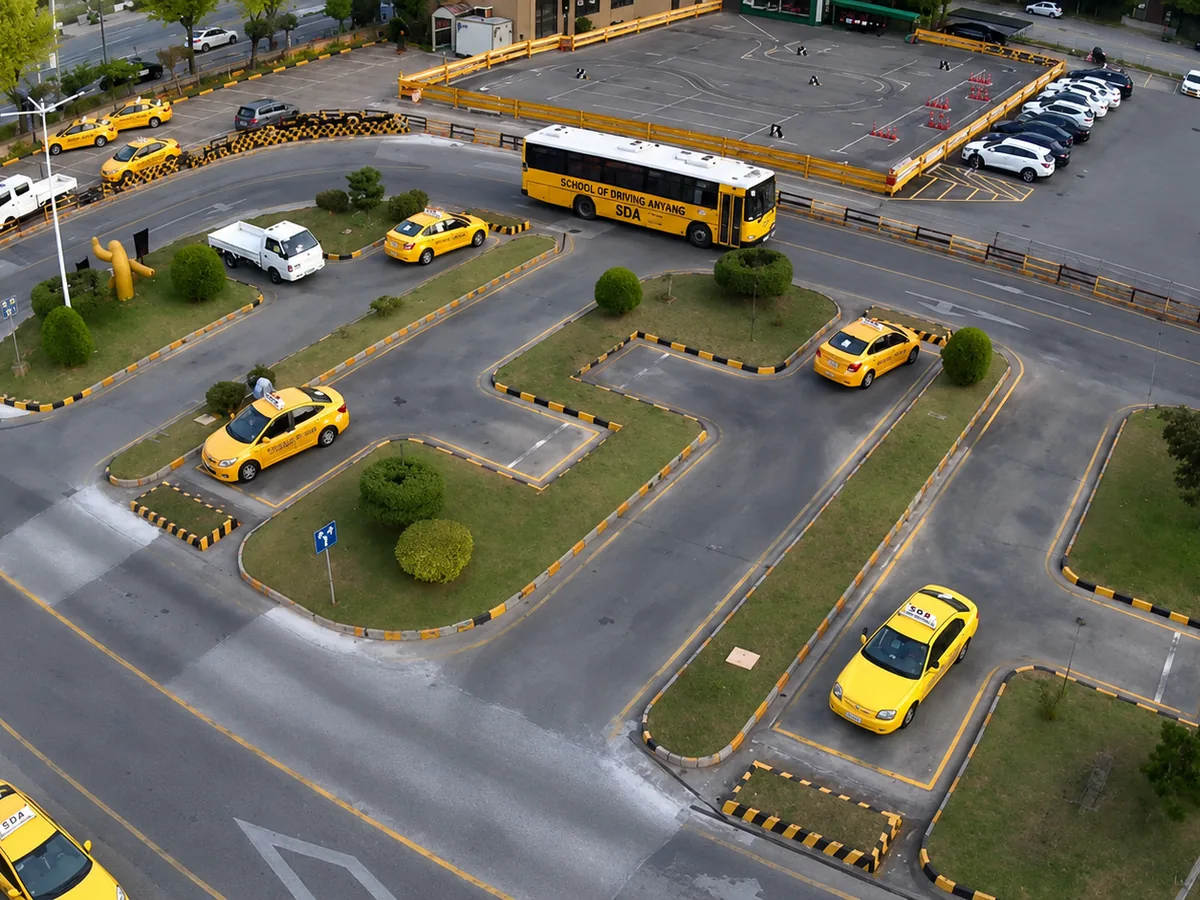
From Suwon Station, Line 1 runs directly north to Gwanak Station in about half an hour with no transfer, and we are five minutes from Exit 1. The full Korean licence course is taught in English: three hours of Saturday theory, four hours of course practice and six hours of road driving, with both practical tests conducted on our own site. Class 2 Regular is 765,000 KRW for the programme and around 875,000 KRW in total, taking roughly ten days.
Send us your nationality and visa type. We will confirm whether a course is even necessary.
Suwon is the easiest journey of any city outside Anyang. One train, no transfer, and you stay on Line 1 the entire way.
From Suwon Station take Line 1 north through Hwaseo, Sungkyunkwan University, Uiwang, Dangjeong, Gunpo, Geumjeong, Myeonghak and Anyang to Gwanak. Exit 1, five minutes on foot.
Suwon residents frequently reach us faster than people living in central Seoul. If you have been assuming a Seoul driving school would be more convenient, check the actual journey before deciding.
Plus whatever it takes to reach Suwon Station from your address. Check Naver Map or KakaoMap on the day — both are markedly better than Google Maps for Korean transit.
Theory runs 13:00 to 16:00 and registration closes at 12:00. A late-morning train from Suwon comfortably makes it, and the Saturday service is not busy in that direction.
Southern Gyeonggi has a dense concentration of manufacturing and technology employers, and a correspondingly international workforce.
E-2 visa holders at schools and hagwons throughout the area.
Suwon has several large campuses with substantial international enrolment.
Once you live in Gyeonggi rather than central Seoul, a car stops being optional.
Relocated staff who need a licence before the company car arrives.
Road training for people licensed abroad who have not yet driven in Korea.
Central Seoul makes a car look unnecessary. Suwon and the surrounding areas do not. Once your weekly routine includes a supermarket that is a bus ride away, a workplace on an industrial estate, children at a school with no direct line, or weekends anywhere outside the metropolitan network, the maths changes.
Most Suwon students who contact us are not asking whether they need a licence. They worked that out already. They are asking how to get one when the whole process is normally conducted in Korean.
A direct Line 1 train and a five-minute walk. For a Suwon address this is one of the easier Saturday commitments you will make.
Course and road practice run 09:00 to 20:00, and we are open 365 days a year. Book each session at least one hour in advance and complete your hours within three months.
Identical wherever you travel from. No Gyeonggi surcharge and no premium for English instruction.
The Class 2 Regular licence covers ordinary cars and passenger SUVs. Class 1 Regular is only needed for 15-seat vans or trucks under 12 tons.
The written test is the only part of the course held at a government facility, and Gyeonggi-do has its own driver's licence examination centres serving the Suwon area. They are generally quicker to get through than the Seoul centres, particularly Gangnam.
For most services you are not restricted to the centre nearest your registered address, so pick whichever fits your week. Go mid-week and mid-morning, and confirm the centre's services before travelling.
No transfer from Suwon Station, and roughly half an hour on the train.
Theory, circuit and road instruction, for over ten years and more than 50 nationalities.
Skills and road tests both happen here, so the written test is your only government trip.
Take Line 1 north from Suwon Station through Hwaseo, Sungkyunkwan University, Uiwang, Dangjeong, Gunpo, Geumjeong, Myeonghak and Anyang to Gwanak Station. It is direct with no transfer, roughly half an hour on the train, then Exit 1 and a five-minute walk.
There are driving schools throughout Suwon, but very few deliver the whole course in English rather than supplying an instructor with some English. Given the journey is a single direct train of about thirty minutes, most students find travelling worthwhile.
Usually four or five across about ten days: one Saturday for the theory class, one visit to an examination centre for the written test, and course and road sessions that can be stacked into blocks.
Exactly the same as anywhere. Class 2 Regular is 765,000 KRW for the programme and around 875,000 KRW all in. Class 1 Regular is 795,000 and roughly 905,000 KRW. All prices include VAT and three-month interest-free instalments are available.
Gyeonggi-do has its own driver's licence examination centres serving the Suwon area, and they are generally quicker to get through than the Seoul centres. For most services you are not restricted to a particular centre, so choose whichever suits your week.
Yes. The Saturday theory class from 13:00 to 16:00 is the only fixed point. Practical sessions run 09:00 to 20:00 every day of the year, so evenings and Sunday mornings both work.
Class 2 Regular covers ordinary cars and passenger SUVs, which is what almost everyone needs. Class 1 Regular is only required for 15-seat vans or trucks under 12 tons.
Tell us where in Suwon you are based and when you can start. We will confirm the course dates, the total cost and the nearest examination centre for your written test.
We'll reply in English with the total cost, the next start date and what to bring.
