Class 2 Regular
Vehicles of 9 to 10 seats or fewer, motorcycles up to 125cc, standard rental cars and SUVs. The lowest written pass mark of any car category at 60 out of 100.
Age 18+Written 60/100765,000 KRW
Which category you actually need, what each one lets you drive, the automatic-versus-manual trap, and the age rules that catch people out.
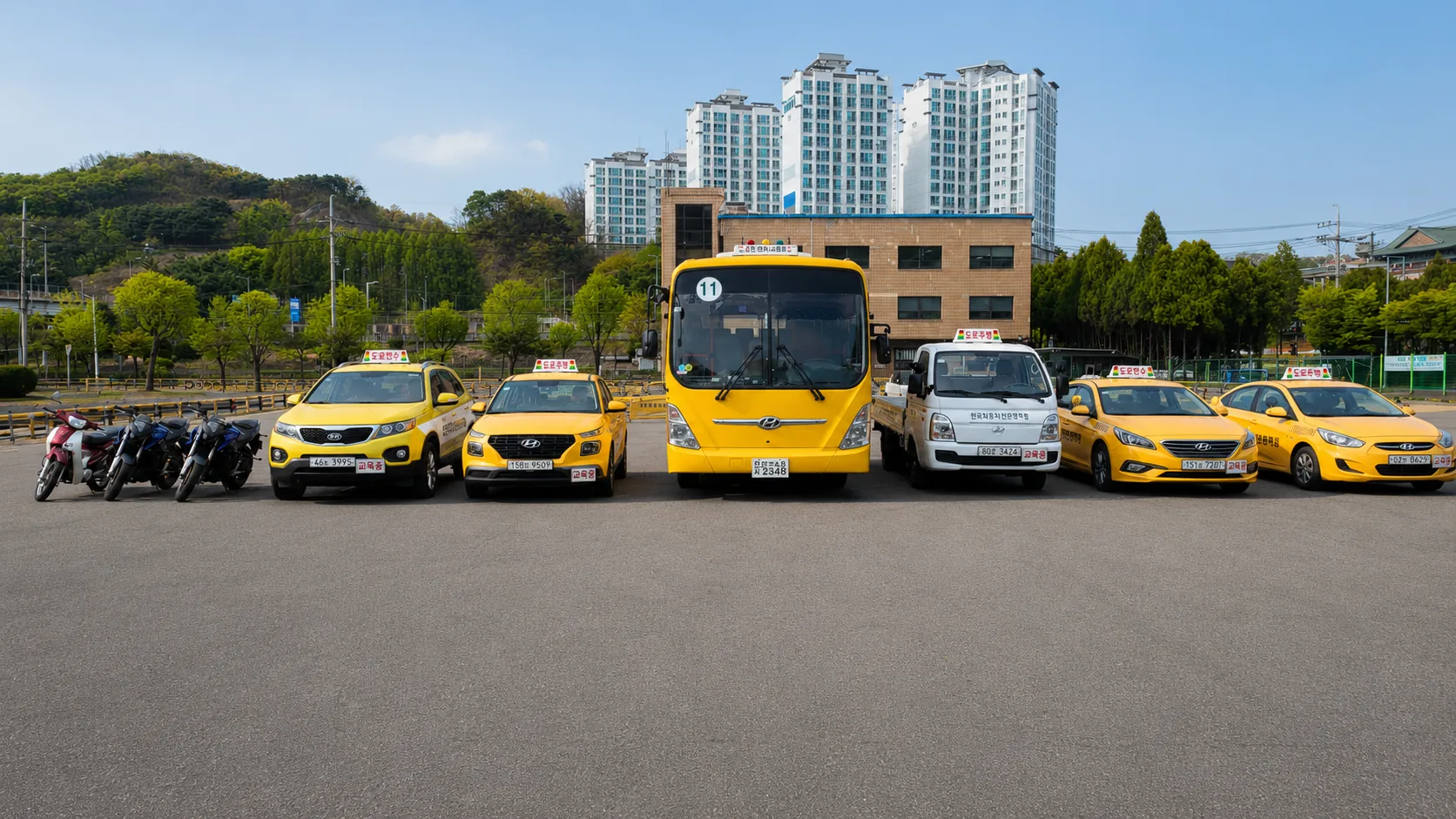
Korea organises licences into two classes. Class 2 Regular covers normal passenger cars and is what most drivers need. Class 1 Regular covers larger vehicles up to 15 seats. Class 1 Large covers buses and heavy trucks, and Class 1 Special covers towing and recovery vehicles — both require age 19 and one year of prior licensed driving. Class 2 Small is for motorcycles over 125cc, and the motorized bicycle licence covers scooters up to 125cc from age 16.
| Type | What it covers | Min. age | At SDA |
|---|---|---|---|
| Class 2 Regular | Passenger cars, vans to 10 seats, trucks to 4 t, motorcycles ≤125cc | 18 | 765,000 KRW |
| Class 1 Regular | Vans to 15 seats, trucks under 12 t, forklifts under 3 t | 18 | 795,000 KRW |
| Class 1 Large | Buses and trucks of all sizes, construction machinery | 19 + 1 yr | 837,000 KRW |
| Class 1 Special | Towing, recovery vehicles, trailers | 19 + 1 yr | — |
| Class 2 Small | Motorcycles over 125cc, any engine size | 18 | from 247,500 KRW |
| Motorized bicycle | Scooters ≤125cc, electric kickboards | 16 | 405,000 KRW |
Swipe the table sideways to see every column.
If you are driving a normal passenger car, an SUV or a typical rental in Korea, Class 2 Regular is the category you want.
Vehicles of 9 to 10 seats or fewer, motorcycles up to 125cc, standard rental cars and SUVs. The lowest written pass mark of any car category at 60 out of 100.
Motorcycles over 125cc. An independent licence — no car licence grants it, and the course test pass mark is 90 out of 100.
Vans and minibuses up to 15 seats, trucks under 12 tons, forklifts under 3 tons — plus everything Class 2 permits.
Buses and trucks of every size and most construction machinery. Age 19 and one year of prior licensed driving, excluding motorcycles.
Towing and recovery vehicles and trailers. Same age and experience conditions as Class 1 Large. Rarely needed for ordinary expat driving.
Do you really need Class 1 Regular? Most foreign residents do not. Unless you specifically plan to drive a 10 to 15 seat vehicle, Class 2 Regular covers everyday needs and costs 30,000 KRW less for identical training hours.
Class 1 and Class 2 Regular are each issued in an automatic and a manual condition. The choice is made when you book the test, not afterwards.
Lets you drive both manual and automatic vehicles within the class. Choose this if there is any chance you will need a stick shift — rental vans, work vehicles or a car back home.
Restricted to automatic-transmission vehicles. Easier to learn and by far the most common choice in Korea, where the overwhelming majority of cars are automatic.
Confirm before you book. If you test in an automatic, your licence may be restricted to automatic vehicles permanently unless you later take a condition-change course. Upgrading afterwards costs 283,000 KRW for Class 2 or 298,000 KRW for Class 1.
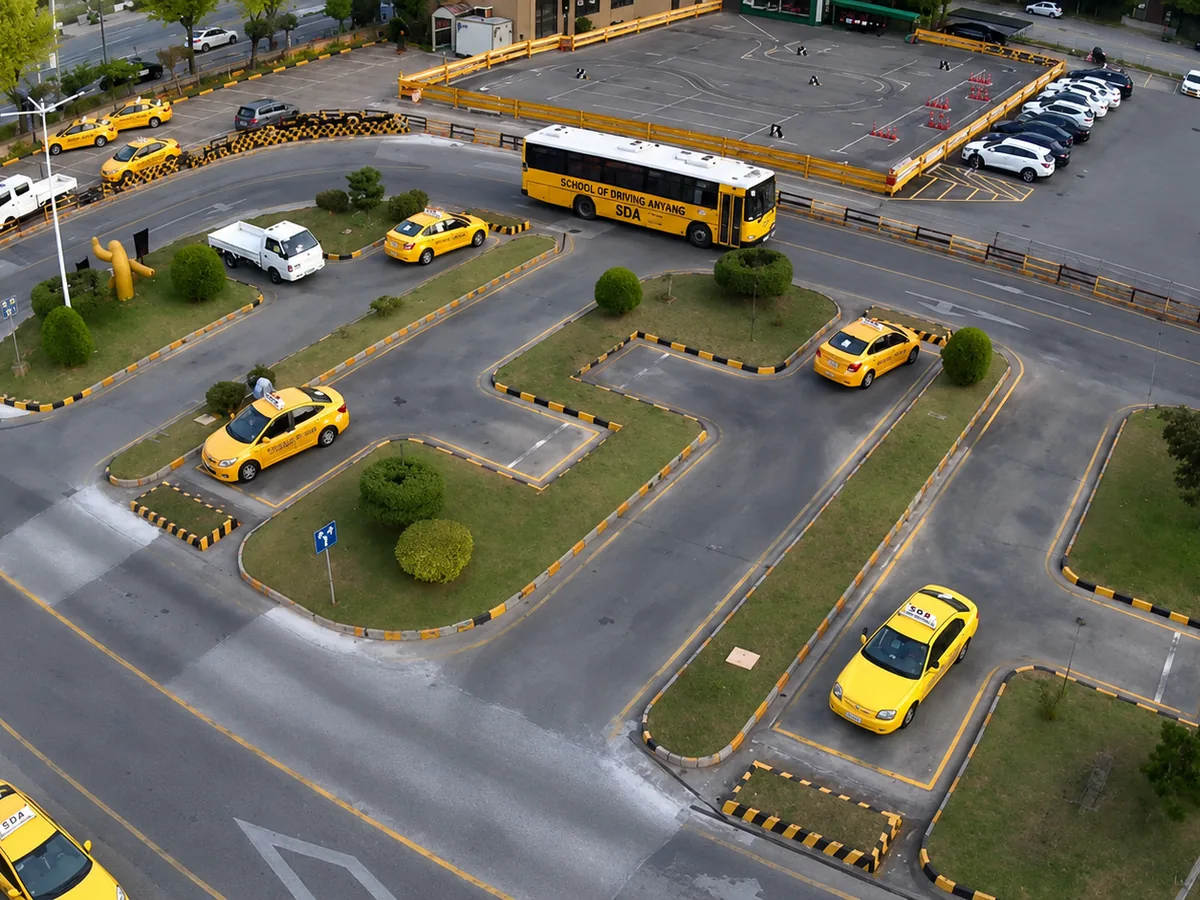
Car, motorcycle and heavy vehicle training all run from the same Anyang campus.



Teachers, engineers and military personnel explain what they picked and why.
Normal car, small SUV or a typical rental — Class 2 Regular. A larger passenger vehicle up to about 15 seats — Class 1 Regular. A bus, heavy truck or towing rig — Class 1 Large or Special.
Decide before you book. Manual covers both; automatic restricts you. Changing later means paying for another course.
Regular and Small categories start at 18, the moped licence at 16. Large and Special require 19 and one year of prior licensed driving.
If you already hold a foreign licence you may qualify for exchange instead of full testing. Note that exchange can be limited to the Class 2 Regular equivalent in some cases.
Class 2 Regular is almost always enough. Class 1 costs more and has a higher written pass mark for capability you will never use.
Testing in an automatic restricts the licence. Confirm what you need before booking rather than paying for a condition change later.
Age 19 and one year of prior licensed driving are both mandatory. Verify before you pay a programme fee.
Rules vary by country and can limit you to the Class 2 Regular equivalent. Always confirm for your own nationality.
Unedited reviews, pulled live from our Google Business Profile.
Class 2 Regular is enough for a normal passenger car, typically described as up to 9 or 10 seats. It is the category the large majority of foreign residents take.
When you expect to drive larger ordinary vehicles — vans and minibuses up to 15 seats, or trucks between 4 and 12 tons. It includes everything Class 2 permits.
Yes. Class 1 and Class 2 Regular are each issued in automatic and manual conditions. If you test in an automatic, your licence is restricted to automatic-transmission vehicles.
18 for Class 1 Regular, Class 2 Regular and Class 2 Small. 19 for Class 1 Large and Class 1 Special, which also require one year of prior licensed driving. The motorized bicycle licence is available from 16.
Not always. Exchange can be limited to the Class 2 Regular equivalent depending on your country and the licence you hold. Confirm with the licensing authority before you rely on it.
A separate category for towing and recovery vehicles and trailers. It carries the same age and experience requirements as Class 1 Large and is rarely needed for ordinary expat driving.
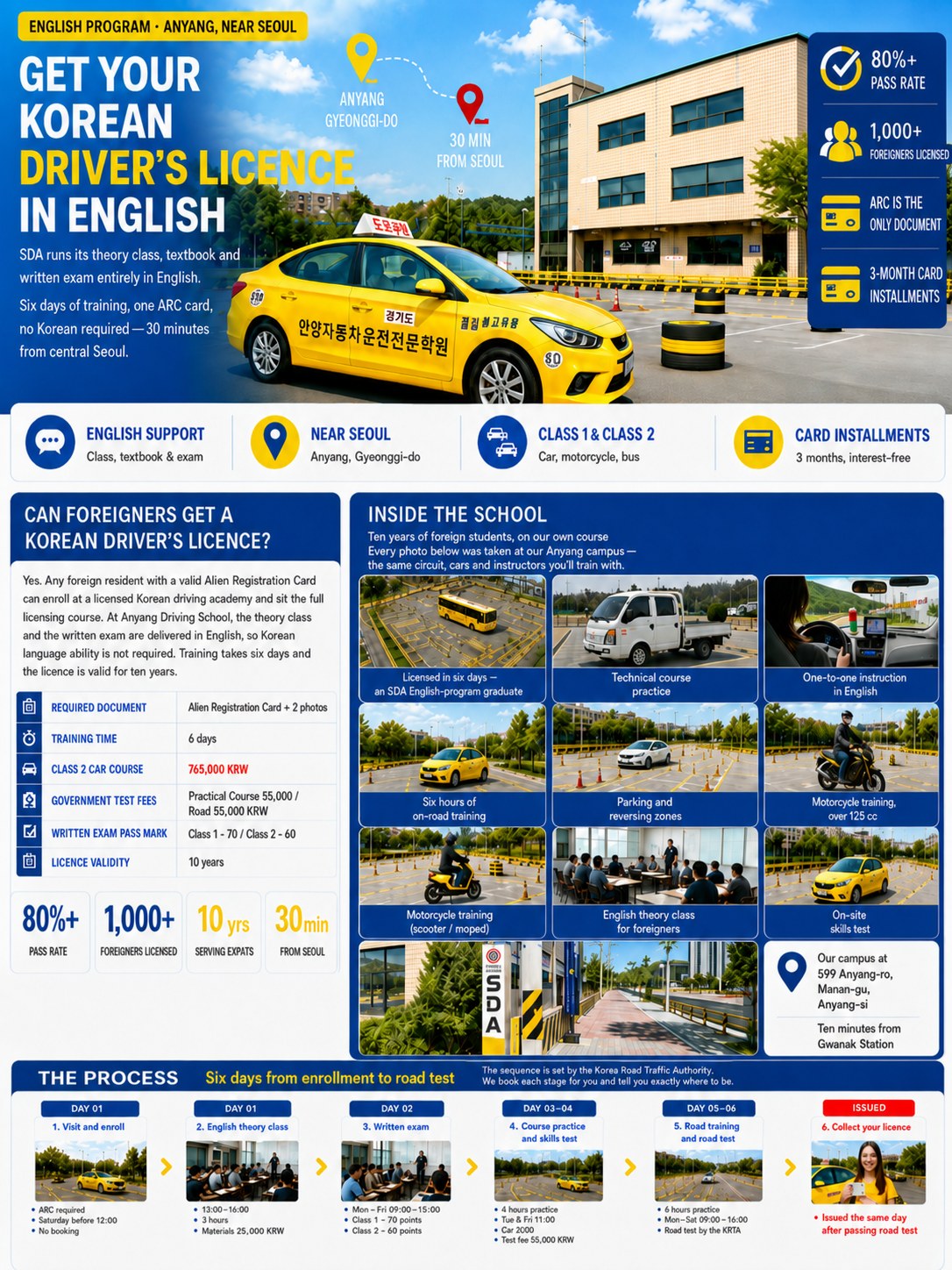
Requirements, cost, the six-day sequence and what happens on each day — tap the image to open it full size.
Tell us your licence type and visa status. We reply in English, usually the same day, with the next available Saturday, your total cost and exactly what to bring.
We'll reply in English with the total cost, the next start date and what to bring.
