We recommend what actually fits
If six hours of road practice covers it, we will not put you through a full course.
A permit if you are visiting, a Korean licence if you live here. Then the part nobody prepares you for — actually driving on Korean roads.
There are three routes. Short-term visitors carry an international driving permit with their original licence, obtained before travelling and valid one year from issue. Registered residents holding an Alien Registration Card take a Korean licence, which is the appropriate document once you live here. The Class 2 Regular programme is 765,000 KRW and around 875,000 KRW in total, taught entirely in English over about ten days. If you already drive, six hours of road practice from 366,000 KRW covers what is different about Korean roads.
Send us your nationality and residence status and we will map out the fastest route.
Which one applies depends on one thing: whether you are a registered resident.
Visitors carry an IDP together with their original home licence and passport. It is valid in Korea for one year from its issue date and must be obtained in the country that issued your licence, so it cannot be arranged after you arrive.
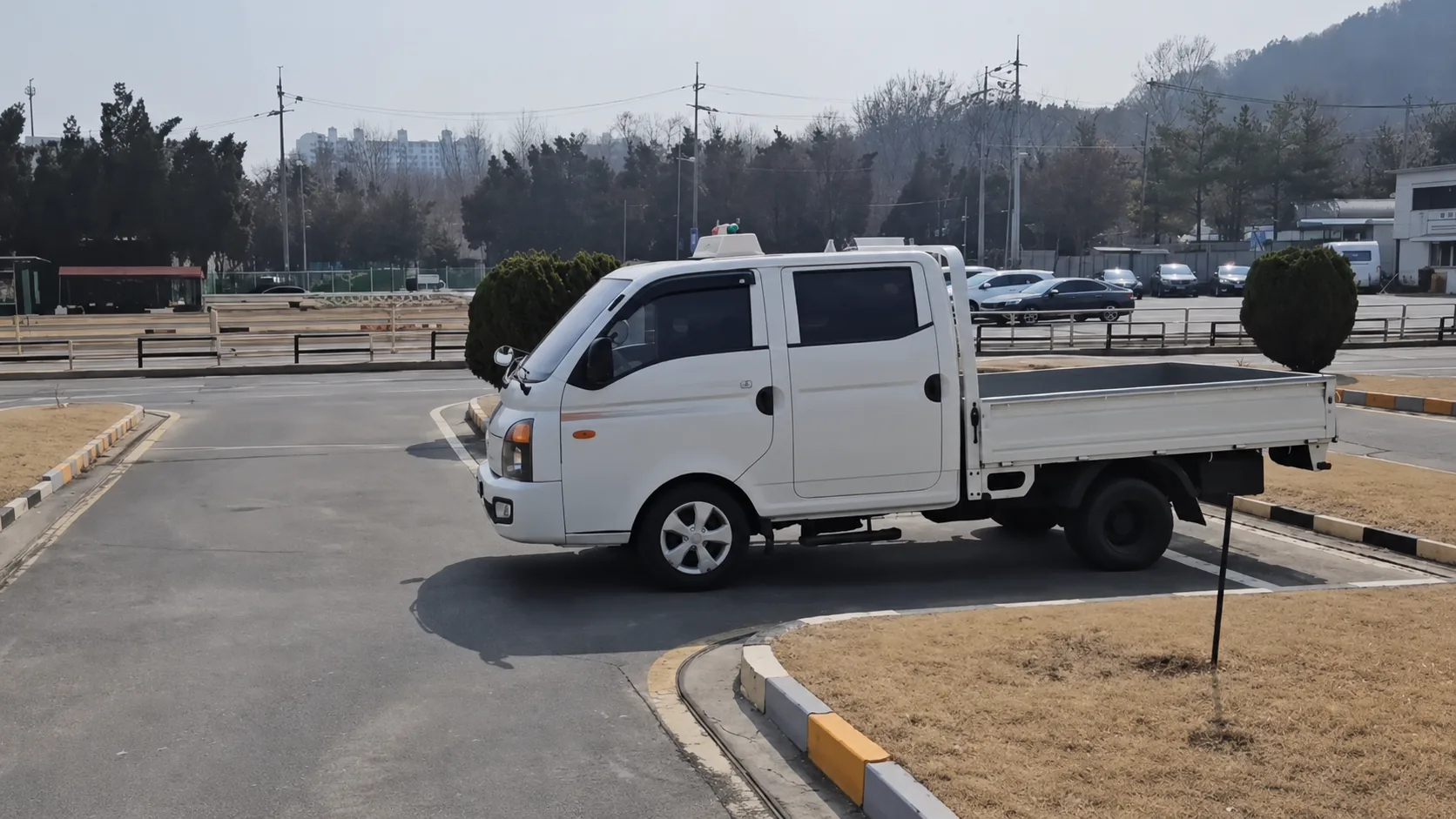
Once you hold an Alien Registration Card, a Korean licence is the appropriate document. The full course runs about ten days and is taught entirely in English: Saturday theory, four hours of course practice, six hours of road driving, with both practical tests conducted on our own site.
An IDP is a travel document. Once Korea is where you live, it stops being the right tool — and renewing one means going back to the authority in your home country, which is why residents move to a Korean licence sooner or later.
Visa type matters less than most people expect. What the counter actually looks at is your registration and your documents.
We are a driving academy, not an immigration adviser. Nothing here guarantees that any particular visa status qualifies you for a Korean licence — that is determined by the licensing authority on the day, against your own documents. Confirm your position before you spend money on anything.
The paperwork is largely the same. What differs is the timing, the schedule and the traps.
Contract hours are the whole problem. Hagwon and public school schedules need completely different plans.
Eligibility is rarely the issue; the three-month training window versus the academic calendar is.
Shift patterns, employer schedules, and taking the written test in a language other than English.
A real cost against a limited stay. Frequently the answer is an IDP rather than a licence.
Long-term residence, family driving, and a Korean-speaking spouse who can help with the counter.
A separate documentary route, plus USFK's own on-installation requirements.
Plenty of expats arrive as competent drivers and still find the first month difficult. The problem is rarely skill — it is the first drive through evening traffic in an unfamiliar city, under conventions nobody explained.
Six hours of one-to-one road practice in English covers all of it, from 366,000 KRW.
Only relevant if you need the full course. Walk in before 12:00 with your ARC — no booking and no deposit.
Course and road practice run 09:00 to 20:00, and we are open 365 days a year. Book each session at least one hour in advance and complete your hours within three months.
The full course is for residents starting from scratch. The road practice hours at the bottom are for those already licensed.
Diplomatic and SOFA status can change which documents apply. Tell us your status when you enquire rather than assuming the standard resident route.
Every ten years under 65, every five from 65 to 74, every three from 75. Class 1 holders take an aptitude test at each renewal; Class 2 holders do from 70. Deferral while abroad exists but must be applied for.
Reissue is the simplest process in Korean licensing — no test, no aptitude check, usually no new photo, often same day at an examination centre.
The licence does not lapse when your visa does. It stays valid to its renewal date, which matters if you leave Korea and come back later — as a large share of expats eventually do.
If six hours of road practice covers it, we will not put you through a full course.
Ten years and more than 50 nationalities — teachers, engineers, embassy staff, military and families.
A full licence from scratch, or six hours of road practice if the paperwork is already sorted.
Every ten years under 65, every five from 65 to 74, and every three from 75. Class 1 holders take an aptitude test at every renewal and Class 2 holders from age 70. Deferral is possible while you are abroad but must be applied for with evidence.
Reissue is the simplest process in Korean licensing. No test, no aptitude check, usually no new photo since the one on file is reused, and often issued the same day at an examination centre.
Send us your residence status and whether you already drive. If six hours of road practice is all you need, we will say so rather than putting you through a full course.
We'll reply in English with the total cost, the next start date and what to bring.
