Written theory test
The 40-question touchscreen exam, available in English. Monday to Friday.
Which centre does what, where English is available, what to carry — and why an academy student only needs to go once.
Korea Road Traffic Authority examination centres handle the written theory test, the aptitude and vision check, licence issuance, renewal and reissue. Seoul has four — Gangnam, Gangseo, Dobong and Seobu — with further centres across Gyeonggi and Incheon. Services differ between centres, so confirm the one you need is offered before travelling. Students at a certified academy take the skills course test and the road driving test at the academy itself, so the only government visit needed is for the written test.
Tell us what you need to do and where you live. We will point you to the right counter.
Four Korea Road Traffic Authority examination centres serve the capital. They are not interchangeable — services differ.
강남운전면허시험장. The busiest of the four and the one most foreign residents in southern Seoul default to. Expect queues on Monday mornings and the day after a public holiday.
강서운전면허시험장. Serves western Seoul and the Gimpo corridor. Generally the easier of the large centres to get through quickly.
도봉운전면허시험장. Covers northern Seoul. Convenient if you live along the upper section of Line 1 or Line 4.
서부운전면허시험장. Serves the north-west of the city. Smaller than Gangnam, and correspondingly less crowded.
Services vary by centre and are revised periodically. Not every centre runs every test category, and counter services differ. Ring the centre or check the authority's site before you cross the city.
Gyeonggi-do and Incheon are covered by their own examination centres, including facilities serving Suwon, Yongin and the Incheon metropolitan area. For residents south of Seoul these are frequently faster to reach and quieter than Gangnam, even when the distance on the map looks similar.
Most foreign applicants only need a centre for two or three of these. Knowing which saves an entire wasted morning.
The 40-question touchscreen exam, available in English. Monday to Friday.
Eyesight, colour recognition and hearing. Required before issuance and at renewal.
Issued once the written test and skills test are passed. Valid one year.
New cards, replacements for lost or damaged licences, and English-language licences.
Periodic renewal for Class 1 and Class 2 holders.
Skills course and road tests at centres with a course — but see the section below first.
This is the part that surprises most people. If you train with a certified academy, you only visit a government centre once.
Because the skills test and the road test are conducted here, an SDA student's only trip to a government examination centre is for the written test and the vision check. Everything else happens on the same site where you trained.
The theory test runs on a touchscreen and offers several languages including English, Chinese and Vietnamese. You select the language at the terminal before the exam starts. There is no separate booking, no surcharge and no need to arrange an interpreter.
Counter staff, however, are a different matter. Front-desk English varies considerably between centres and between shifts. Take a Korean-speaking friend if you can, or have us write down what you need in Korean before you go.
Fees are set by the authority and change from time to time. Confirm the current amount at the counter rather than relying on a figure you read online.
The written test, the aptitude check and counter services generally operate on a walk-in basis during opening hours. Practical tests at centres that run them are the exception and are scheduled.
Registration for same-day services closes well before the building does. Arriving after lunch on a busy day frequently means being told to come back tomorrow.
Worst times: Monday mornings, the first working day after a public holiday, and the final week of a renewal period. Best times: mid-week, mid-morning, outside university holidays.
Three hours of road safety education in English, 13:00 to 16:00. Arrive by 12:00 with your ARC to register. No booking needed.
Written test plus the vision and hearing check, Monday to Friday. This is the only government visit in the whole programme.
Four hours of course practice, the skills test on our circuit, six hours of on-road training, then the road test.
About ten days including weekends.
Examination centres need large sites, so most sit on the outer edge of their district rather than on top of a subway exit. The train part is straightforward; it is the ten to twenty minutes after the station that catches people out. Check whether your centre needs a local bus or a short taxi from the nearest exit, and add that to your estimate before deciding what time to leave.
Skills test and road test happen on our own circuit, so the centre is only for the written test.
Consistently higher than candidates who prepare alone without an academy.
Everything in English, from the Saturday theory class to the road test itself.
Four Korea Road Traffic Authority examination centres serve Seoul: Gangnam, Gangseo, Dobong and Seobu. Further centres cover Gyeonggi-do and Incheon, and for residents south of the city these are often quicker to reach than Gangnam.
The theory test is delivered on a touchscreen and offers English along with several other languages, selected at the terminal before the exam begins. Counter service in English varies by centre and by shift, so it helps to bring a Korean speaker or written notes for the front desk.
The written test, the aptitude check and most counter services operate on a walk-in basis during opening hours. Practical tests at centres that run them are scheduled. Registration for same-day services closes well before the building does, so go in the morning.
For most services you are not restricted to a particular centre and can use whichever is convenient. Requirements can differ by service, so check when you call ahead.
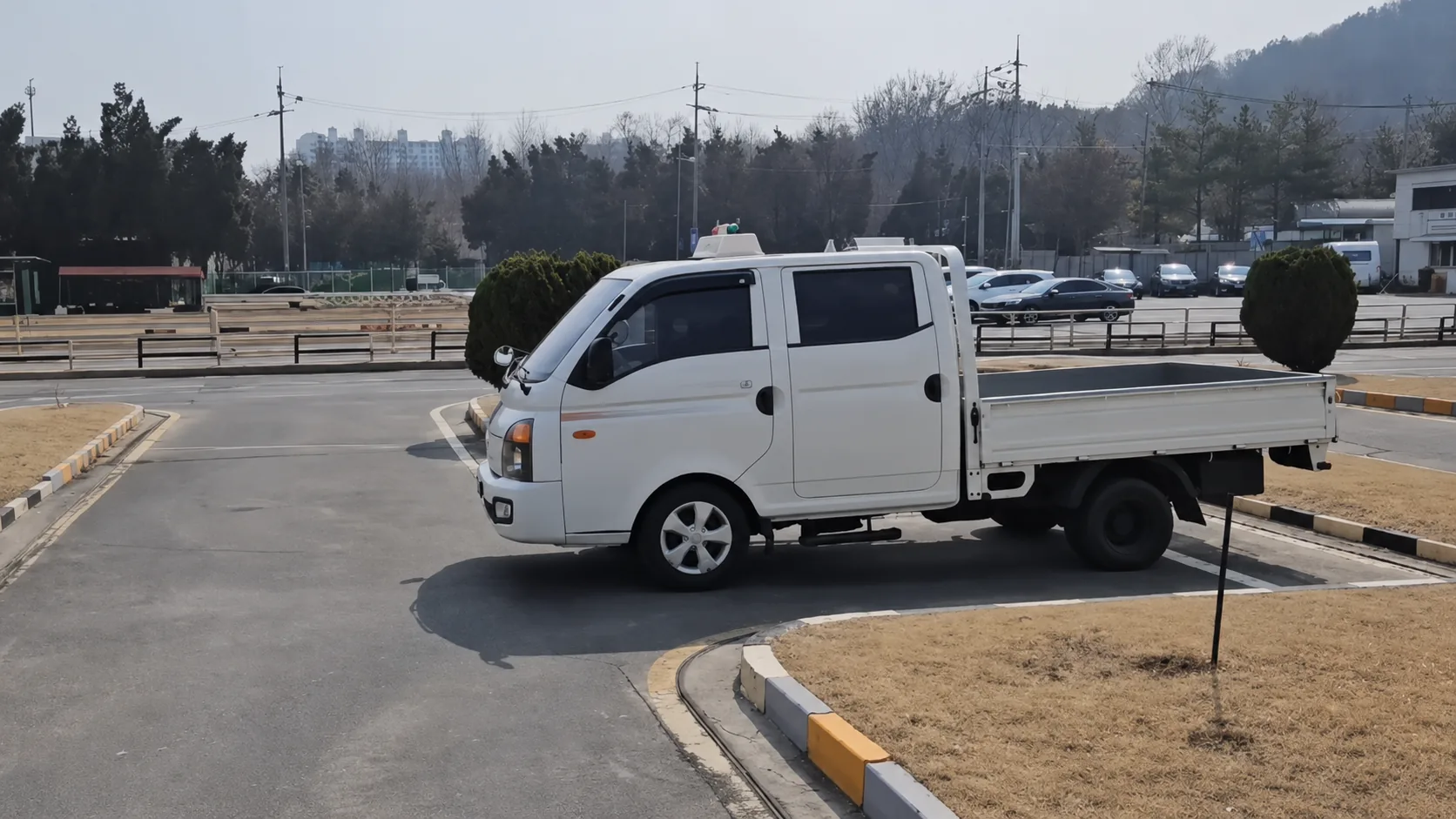
If you train with a certified academy, both practical tests are conducted at the academy on its own circuit and routes. At SDA the skills test runs Tuesday and Friday at 11:00 and Saturday at 14:00, and the road test runs Monday to Saturday between 09:00 and 16:00.
Mid-week, mid-morning. Avoid Monday mornings, the first working day after a public holiday, and the closing week of a renewal period, when queues can run well over an hour.
Tell us what you need to do at a centre and where you are starting from. We will tell you which one to use, what to carry, and how much of the process you can complete at our academy instead.
We'll reply in English with the total cost, the next start date and what to bring.
